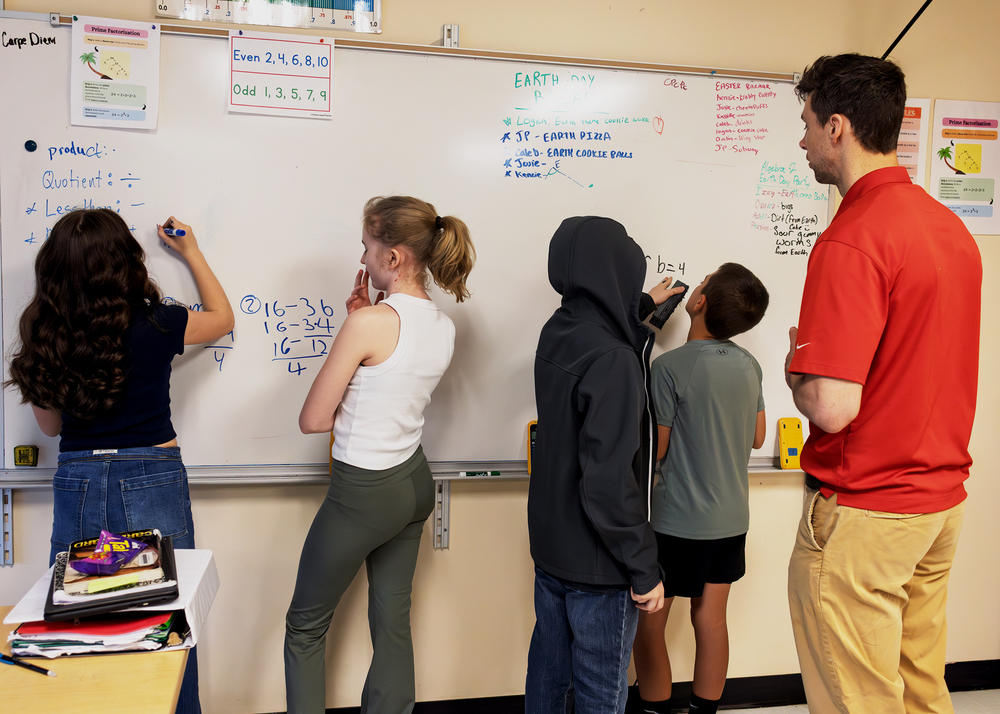
A newer approach to math instruction is helping students stay more engaged and take a more active role in their learning.
Math teacher Jacob Preston is using the Building Thinking Classrooms model to shift the focus from listening to doing. This approach is designed to get more students actively thinking during class, rather than just watching or copying notes.
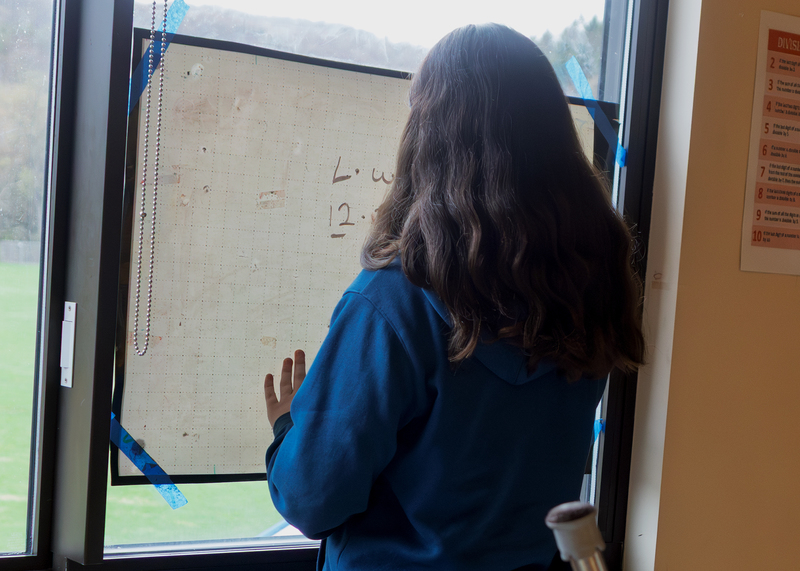
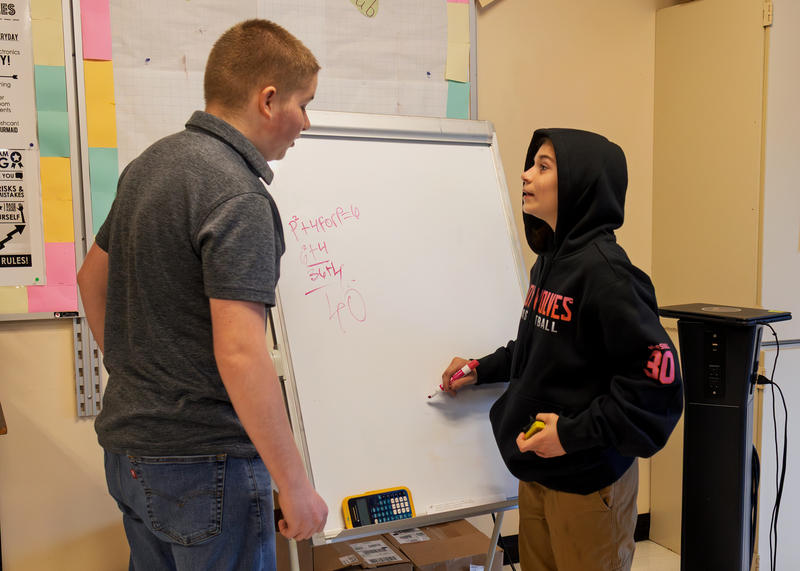
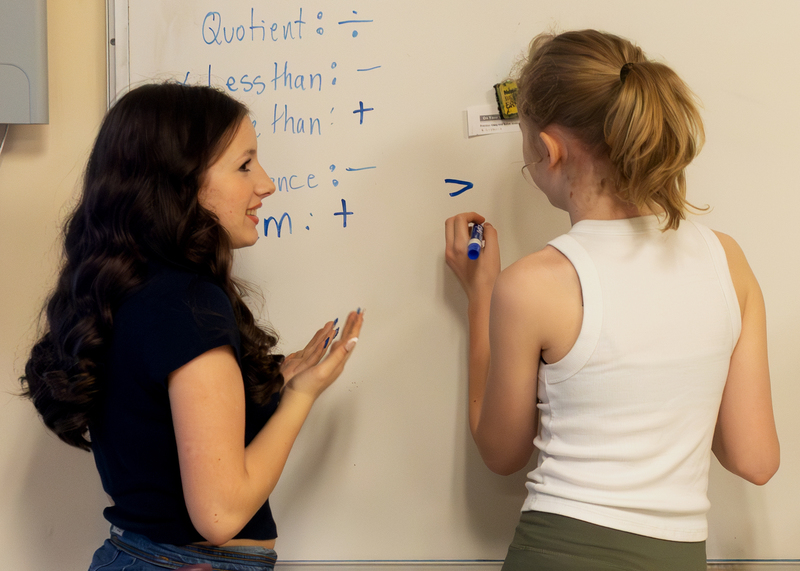
Instead of working quietly at their desks, students spend most of the class at whiteboards, solving problems together. Each lesson begins with a short period of direct instruction to introduce the concept.
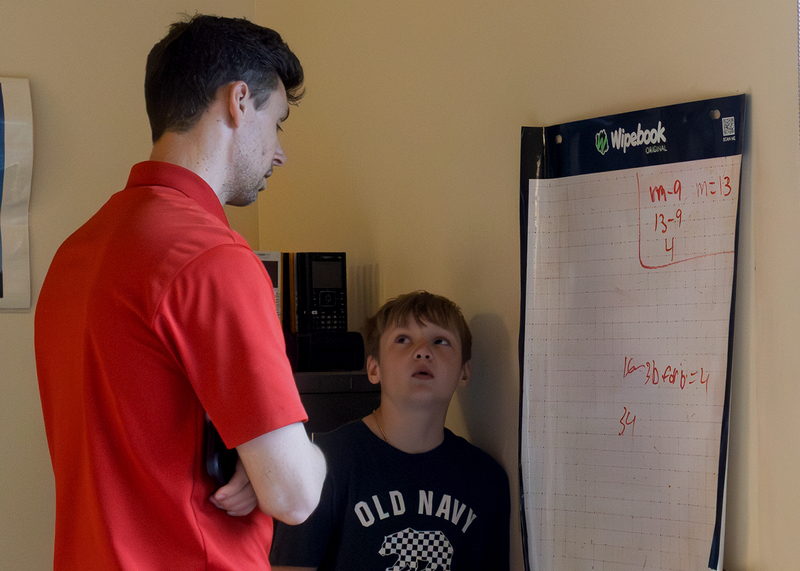
Students are then randomly paired and asked to work through problems with a partner. When they need help, they are encouraged to check in with another group before going to the teacher. This process helps students explain their thinking and learn from each other.
“In my classroom, students use whiteboards on a daily basis to work through the lesson,” Preston said. “This approach helps build their ability to explain their thinking and strengthens their understanding of the material.”
The results have been positive. Students are more engaged during class, and there are fewer behavior issues. Because they are actively working and collaborating, they stay focused and involved in the lesson.
The Building Thinking Classrooms model is becoming more widely used in schools as teachers look for ways to increase participation and help students build stronger problem-solving skills.